How can we acknowledge the hurt we have experienced, remain true to ourselves and still find a way to meet others with compassion?
Empathy and compassion are sometimes misunderstood as letting people off the hook, overlooking harm or making excuses for behaviour that has caused suffering. But recognising another person’s humanity doesn’t mean agreeing with their actions.
We can become curious about what might be happening for someone without pretending to know. We can acknowledge their possible fears, needs or vulnerabilities while remaining clear about the impact of their behaviour.
Understanding someone’s history or circumstances doesn’t mean we need to accept how they behaved towards us. We can say no, set boundaries to care for our own needs and speak honestly about what happened. We can also decide that a relationship is no longer right for us.
Compassion doesn’t require us to stay in situations that are harmful.
Perhaps it is about being able to hold two realities at once: that someone may have been acting from their own pain, fears or limitations, and that their actions may nevertheless have caused us considerable hurt.
Remembering ourselves
I often hear people speak about how much they understand the person who hurt them. They may have spent years making sense of a parent’s difficult childhood, a former partner’s vulnerabilities or the circumstances that shaped someone’s behaviour. They may have developed a sophisticated intellectual understanding of why that person acted as they did.
And yet, despite all this understanding, they feel angry and resentful and unable to find a way to be free from their pain. Sometimes they judge themselves for still feeling this way. They think they should have moved on by now, that they have no right to feel angry when they can see how much the other person suffered too.
I also encounter the opposite experience: people who feel so hurt or angry that the other person becomes an enemy. Their attention becomes fixed on what happened, making it difficult to remain curious about the other person’s experience or recognise that their needs matter too.
Both experiences can take us away from connection. We can become so focused on understanding others that we lose sight of ourselves, or so caught in our own hurt that we lose sight of the person behind the behaviour. What can get lost in all this is compassion for ourselves.
Finding our way beyond blame doesn’t mean bypassing our own hurt. It means making room for it, acknowledging what happened and recognising that our needs and wellbeing matter.
When we are the ones who have caused hurt
There is another side to this. Sometimes we are the person whose actions have caused someone else pain.
It can be difficult to hear that we have hurt another person, or a group of people, particularly when we didn’t intend to. We might feel misunderstood, become defensive or find ourselves explaining why we acted as we did. Sometimes we may genuinely struggle to understand the impact of our behaviour.
Why is it that we sometimes believe we need to fully understand another person’s experience before we can acknowledge that they are hurting?
We can listen, become curious and try to understand what our actions have meant to them. We don’t have to agree with every interpretation of what happened in order to be moved by their experience. Recognising the impact of our actions without collapsing into shame or defining ourselves by what we have done is an important part of developing compassion.
We can acknowledge that we have caused hurt to someone else, connect with our regret and mourn the needs that were not met, without concluding that we are a “bad” person.
Taking responsibility means being willing to look honestly at our actions, listen to the other person’s experience and consider what might be needed to repair the hurt, where repair is possible. Being able to hold ourselves accountable while remaining kind towards ourselves is an expression of compassion for ourselves as well as for others.
The possibility of restorative conversations
Having conversations about the things that have hurt us offers the possibility of repair. These are conversations in which everyone has an opportunity to express their experience, be heard and understand one another more deeply.
They don’t require us to agree about everything or see events in exactly the same way. What matters is a willingness to listen, to be curious about one another’s experiences and to acknowledge the impact of what has happened.
Sometimes, simply having our experience genuinely heard and acknowledged can make a significant difference. Listening to the other person’s experience can also open up possibilities we hadn’t previously imagined.
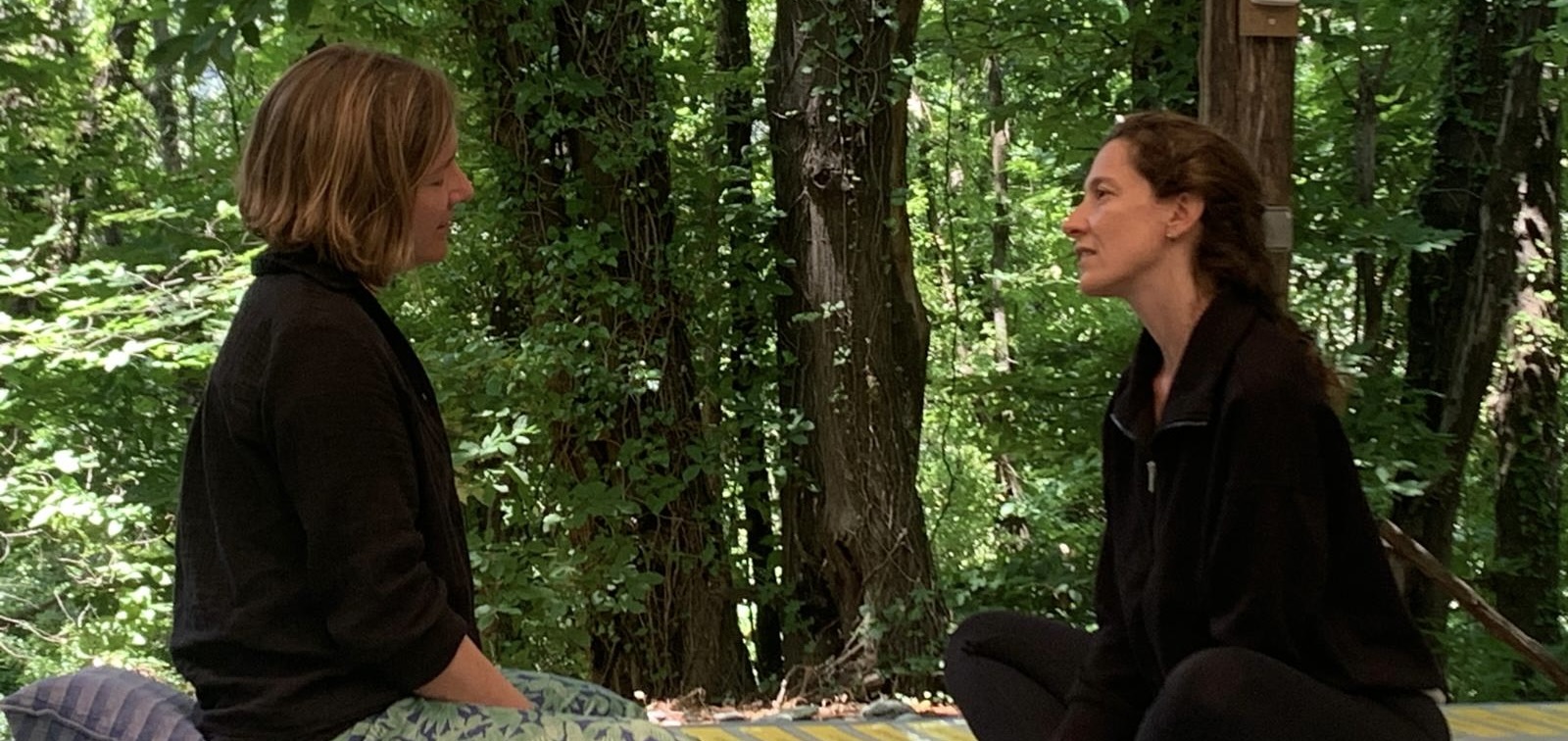
A restorative conversation might involve:
- Telling our story: What happened from our perspective? What did we experience? What was most painful or significant for us?
- Listening to feelings and needs: What feelings arose? What mattered to us? What needs were affected?
- Acknowledging impact: Can we hear what the other person experienced, without immediately defending or explaining?
- Taking responsibility: Is there anything we regret? Is there something we want to acknowledge or make amends for?
- Looking forward: What might help now? Is there a possibility of rebuilding trust or finding a different way of relating?
These conversations can take courage. They ask us to listen to things that may be difficult to hear, as well as to express our own experiences honestly.
When these conversations are possible, they can create an opportunity for something new to emerge: greater understanding, a sense of repair, or perhaps a different kind of relationship.
When conversations aren’t possible
Of course, as many of you will know, these conversations aren’t always possible. Maybe the other person is unwilling or unable to engage. Perhaps you are no longer in contact, or they have died. We may never receive the acknowledgement or understanding we long for, or have the chance to say what we wanted to say and hear what we needed to hear.
Where there has been “abuse” or a significant imbalance of power, such a conversation may put the person who was harmed at further risk. Support from a skilled third party, or choosing not to have the conversation at all, may be wiser.
This doesn’t mean we need to remain stuck in the experience.
Giving voice to what remains unspoken
There are other ways we can begin to work with what has happened, giving space to our feelings, expressing what matters and finding ways to honour our own needs. One starting point can simply be telling our story to someone who is able to listen with empathy. We might explore what happened, how we feel as we remember it, and what we notice in our bodies. What was significant about this experience? Why does it matter so much to us? What needs were met or unmet?
Rather than remaining focused only on what the other person did or didn’t do, we can begin to reconnect with the beauty of the needs underneath our feelings: perhaps trust, belonging, honesty, love, consideration, safety, respect or being seen. We might also explore what it could mean to honour these needs now, even if the circumstances in which they were originally unmet cannot be changed.
Sometimes, it can be helpful to work with another person in a more experiential way. For example, someone might take the role of the person with whom we have unfinished business, giving us an opportunity to express what we have never been able to say. They can offer empathic listening, helping us to stay connected with our feelings and needs as we speak.
This doesn’t require us to pretend to know what the other person thinks or feels. The purpose is to give expression to our own experience, perhaps discovering something new about what matters to us and what we need.
The Enemy Image Process
Another practice from Nonviolent Communication (NVC) that can support this exploration is Marshall Rosenberg’s Enemy Image Process.
When we are hurt or in conflict, we can develop powerful judgements and stories about another person. We might see them as selfish, uncaring, manipulative or deliberately hurtful. These thoughts may feel entirely justified, particularly when we have experienced considerable pain.
The Enemy Image Process invites us to become curious about what lies underneath these judgements. Rather than trying to suppress them or telling ourselves we shouldn’t feel this way, we explore the feelings and unmet needs that give rise to them.
We might then become curious about what could be happening for the other person. What feelings, needs, fears or vulnerabilities might be influencing their behaviour? We don’t need to know the answers, and we certainly don’t need to excuse what happened. We are simply making room for the possibility that there is more to this person than the image we have formed of them.
This process doesn’t ask us to deny our own experience or make the other person right. It offers an opportunity to embrace the needs underlying our judgements and reconnect with what we share with the other person.
Sometimes this shift, even if it is only a small one, can open up a little more space within us.
If the hurt is recent or serious, it may be helpful to talk it through with someone you trust and explore the process with an NVC practitioner, coach or therapist when you feel more resourceful, at your own pace.
Beyond blame, towards connection
We can have enormous compassion for the people who have hurt us and still grieve what we did not receive from them.
Understanding someone’s childhood, their suffering, the wounds they carry and the wider circumstances that may have shaped their behaviour – including systemic and intergenerational trauma, cultural differences, belief systems and social conditioning – can deepen our understanding and compassion. At the same time, understanding where someone’s behaviour comes from does not undo our own experience or mean that we have to overlook the harm. If we are considering whether connection might be re-established, it is important to give careful thought to what would be needed for this to feel safe and meaningful for everyone involved.
Equally, recognising that we have caused someone else hurt does not mean losing compassion for ourselves. We can take responsibility, acknowledge the impact of our actions and remain open to learning and repair.
Holding compassion without excusing harm
Moving beyond blame is not about forgetting what happened, minimising harm or forcing ourselves to forgive. I believe it is about finding a way to hold compassion for ourselves and the reality of our experience while staying open to our shared vulnerability.
We may not always be able to repair what has happened between us. We may not receive the acknowledgement we long for or find the understanding we hoped for. Even so, we can continue to care for what matters to us, take responsibility for our own actions and find ways to meet life with greater compassion.
Perhaps this is where a different kind of connection becomes possible. Difference does not preclude connection. We do not have to agree, share the same perspective or resolve every disagreement to recognise the humanity in one another. We can remain grounded in our own experience while making room for another person’s, without denying our hurt or pretending the harm didn’t matter.
Creating rituals to mark an ending
It can be helpful to create a ritual to mark the ending of a relationship or another significant chapter in our lives.
Rituals can take many forms. They might involve planting a tree, creating a photo album, writing a letter that we don’t necessarily send, lighting a candle, visiting somewhere meaningful, or gathering with people who have been part of our journey.
When my mum died, I planted an olive tree to mark her passing. More recently, following the ending of a 15-year relationship, I created a photo album of that period of my life. I wanted to acknowledge and preserve the memories of those years, rather than allow the painful ending to overshadow everything that had come before.
These acts don’t necessarily take away the grief or mean that we have reached a point of closure. Rather, they offer us an opportunity to acknowledge what has mattered, honour what we have experienced and recognise that something has changed.
They can help us to make a gentle transition: carrying forward what we want to remember, learning from what we have experienced and gradually making space for new possibilities.
I hope that something in these reflections has offered a new perspective or perhaps encouraged you to explore what might support you through your own life’s challenges. Above all, I hope they leave you with a sense of possibility for what might lie ahead.
This is the final article in Finding Our Way Back to Connection, a series exploring heartbreak, embodied expression, self-compassion and compassionate communication. [Click here to read the full series.]
Books and further reading
Rosenberg, Marshall B. (2004). Getting Past the Pain Between Us: Healing and Reconciliation Without Compromise. PuddleDancer Press.
Rosenberg, Marshall B. (2005). The Surprising Purpose of Anger: Beyond Anger Management: Finding the Gift. PuddleDancer Press.
Rosenberg, Marshall B. (2015). Nonviolent Communication: A Language of Life. 3rd edition. PuddleDancer Press.
Exploring this further
If you would like to explore these ways of working more deeply, I offer one-to-one sessions, needs-focused coaching and facilitation, drawing on Nonviolent Communication (NVC), Authentic Movement and Dance.
I also offer workshops and retreats in places of natural beauty, creating opportunities to slow down, reconnect with ourselves and others, and explore the possibilities of embodied expression, empathy and connection.
Leave a Reply